
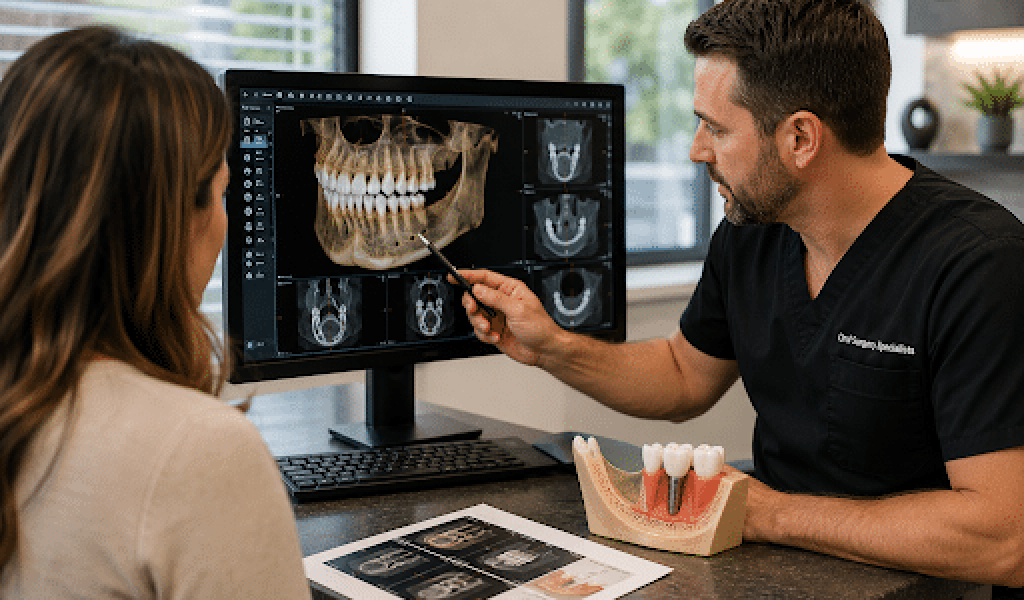
Bone grafting can help rebuild areas of the jaw that have lost bone and create a stronger foundation for dental implants. If your oral surgeon has recommended a graft, you may have questions about why it is necessary, what the procedure involves, how long healing takes, and what happens afterward.
Before scheduling treatment, having an open conversation with your oral surgeon can help you understand your options and make informed decisions. Here are some important questions to ask before bone grafting surgery.
Why Is Bone Grafting Recommended for My Treatment?
Start by asking why you need a bone graft and how it fits into your overall treatment plan. Bone loss can occur after tooth loss, tooth extraction, gum disease, injury, or other dental conditions. Your surgeon can explain where bone has been lost and why additional bone may be needed.
Ask questions such as:
- How much bone have I lost?
- Where is the bone deficiency located?
- Is grafting necessary before my dental implant?
- What could happen if I do not have the graft?
- Are there alternatives to grafting in my situation?
Understanding the reason for the recommendation can make the procedure feel more manageable and help you understand how it supports your long-term oral health.
What Type of Graft Material Will Be Used?
There are several types of materials that may be used for bone grafting. Depending on your circumstances, your oral surgeon may discuss materials derived from human tissue, animal sources, synthetic materials, or other options.
Ask which graft material is recommended for you and why. You can also ask about where the material comes from, how it works, and what benefits or potential risks are associated with it.
Your questions may include:
- Which graft material do you recommend?
- Why is this material appropriate for my situation?
- Is the material from a human, animal, or synthetic source?
- Are there alternatives?
- What risks or complications should I understand?
A detailed discussion can help you feel more comfortable with the treatment before moving forward. Oral Surgery Specialists can explain the available options based on your individual needs.
What Will Recovery Be Like?
Recovery is an important part of bone grafting treatment. Ask your surgeon what you can expect immediately after the procedure and during the following days and weeks.
You may want to ask:
- How much swelling or discomfort should I expect?
- How long will I need to modify my normal activities?
- What foods should I eat while healing?
- When can I return to work or exercise?
- What symptoms should prompt me to contact the office?
- What instructions should I follow to protect the graft?
Your recovery experience can vary depending on the size and location of the graft and your overall health. Following your surgical team’s instructions carefully can help support proper healing.
How Long Will the Bone Graft Take to Heal?
Healing time is another important consideration, particularly if the graft is being performed as preparation for a dental implant.
Ask your surgeon how long the graft is expected to heal before implant placement can occur. Some patients may have an implant placed at the same time as grafting when appropriate, while others may need to wait until the graft has sufficiently integrated.
Your treatment timeline can depend on:
- The amount of bone being rebuilt
- The location of the graft
- The type of grafting procedure
- Your individual healing response
- Whether additional procedures are needed
Having a general timeline can help you plan appointments and understand the stages of your treatment.
When Can I Get My Dental Implant?
If the ultimate goal is an implant, ask how the bone graft affects your implant timeline. Your surgeon can explain whether the implant can be placed during the same procedure or whether a separate appointment will be necessary.
Ask:
- How will the graft prepare my jaw for an implant?
- How will you determine when the graft is ready?
- Will I need additional imaging before implant placement?
- How long should I expect the complete treatment process to take?
If you are exploring dental implants in Oklahoma City, understanding the relationship between bone grafting and implant placement can help you establish realistic expectations.
What Will the Procedure Cost?
Financial questions are also important to discuss before treatment. Ask for an estimate of the expected cost and whether it includes the surgical procedure, imaging, follow-up appointments, and other necessary services.
You can ask:
- What is included in the treatment estimate?
- Will I need additional procedures?
- Does dental insurance typically contribute toward this treatment?
- Are financing or payment options available?
- Could additional costs arise during treatment?
Knowing the financial details ahead of time can make it easier to plan for care and avoid unexpected expenses.
How Many Follow-Up Visits Will I Need?
Follow-up appointments allow your surgical team to monitor healing and determine whether the graft is progressing as expected. Ask how many visits are typically needed and when they will occur.
Your surgeon may use follow-up examinations or imaging to evaluate the graft before moving on to the next stage of treatment.
What Can Affect Long-Term Success?
Finally, ask what you can do to support the long-term outcome. Your oral surgeon can discuss factors such as oral hygiene, smoking or tobacco use, overall health, medication considerations, and following postoperative instructions.
It is also important to understand that every patient’s treatment and healing process is different. Asking questions and following your surgical team’s recommendations can help you stay informed throughout the process.
Make Your Consultation Count
A bone graft may be an important step toward restoring lost bone and preparing your jaw for an implant. Before treatment, take time to discuss why grafting is recommended, which materials are available, what recovery involves, and how the procedure fits into your overall treatment timeline.
Oral Surgery Specialists can answer your questions, evaluate your individual needs, and explain the treatment options available to you. Going into your procedure with a clear understanding of the process can help you feel prepared for each stage of care.