
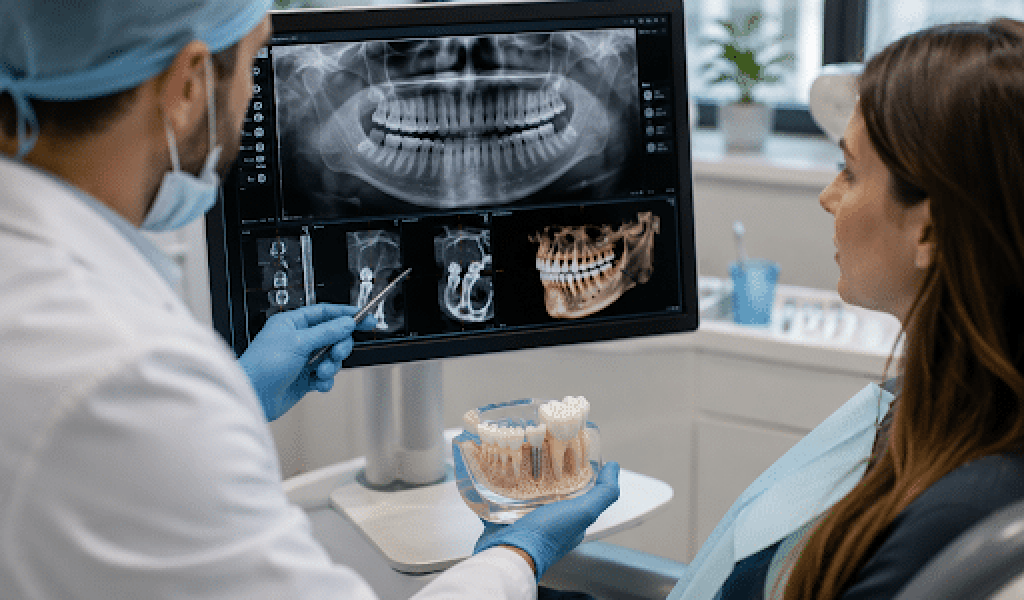
Dental implants can provide a stable, long-lasting way to replace missing teeth, but successful implant placement depends on having enough healthy jawbone to support the implant. When bone has deteriorated after tooth loss or another oral health issue, a bone graft may be recommended before implant placement.
Understanding when a bone graft for dental implants may be necessary can help you prepare for your treatment and understand why your oral surgeon may recommend additional procedures. At Oral Surgery Specialists, treatment planning includes a detailed evaluation of your oral health and the bone available to support an implant.
Why Jawbone Volume Matters for Dental Implants
A dental implant is placed directly into the jawbone, where it gradually integrates with the surrounding bone through a process called osseointegration. Adequate bone volume and density help provide the stability an implant needs to function properly.
When there is insufficient bone, placing an implant may be more difficult or may not provide the desired foundation for long-term stability. Bone loss can also affect the position of an implant, making careful treatment planning especially important.
Having enough healthy bone can help support:
- Implant stability
- Normal biting and chewing forces
- Proper implant positioning
- Long-term function
- A natural-looking result
This does not mean everyone who has lost a tooth will need a bone graft. The amount of bone available varies from person to person, so an individual evaluation is necessary.
How Dentists Evaluate Your Jawbone
Determining whether you need a bone graft involves more than simply looking at the area where a tooth is missing. Your oral surgeon will typically perform a clinical examination and use dental imaging to evaluate the bone.
Clinical Examination
During your examination, your oral surgeon may assess your gums, jaw, existing teeth, and the area where the implant is planned. They may also look for signs of infection, periodontal disease, previous dental procedures, or other conditions that could affect treatment.
Your dental and medical history can also provide important information about factors that may have contributed to bone loss.
3D Imaging
Three-dimensional imaging can provide a more detailed view of the jaw than a traditional two-dimensional X-ray. Cone beam computed tomography, or CBCT, can show the height, width, and structure of the available bone.
This information helps the surgical team determine whether there is enough bone for implant placement and whether additional treatment may be beneficial. It can also help identify anatomical structures that need to be considered when developing the treatment plan.
For patients considering dental implants in Oklahoma City, advanced imaging can be an important part of determining whether bone grafting is needed.
Factors That May Increase the Need for a Bone Graft
Several factors can contribute to jawbone loss and increase the likelihood that grafting will be recommended before an implant.
Tooth Loss
After a tooth is removed or lost, the bone that once supported its root can gradually shrink because it is no longer stimulated in the same way. The longer a tooth has been missing, the more bone resorption may occur.
Tooth Extraction
Bone loss can occur following an extraction, particularly when the extraction site is not preserved. In some cases, a graft performed around the time of extraction can help maintain the bone needed for future implant treatment.
Gum Disease
Advanced periodontal disease can damage the tissues and bone that support teeth. Patients who have experienced significant bone loss from gum disease may require additional treatment before an implant can be placed.
Trauma or Injury
An injury to the jaw or the area surrounding a missing tooth can result in bone loss or changes to the shape of the jawbone.
Previous Dental Treatment
Certain previous procedures or complications can affect the amount of bone available for implant placement. Your oral surgeon can evaluate the site and determine whether grafting would improve the foundation for an implant.
What Happens If You Need a Bone Graft?
If your evaluation shows that you do not have enough bone for the planned implant, your oral surgeon can discuss available treatment options. The recommended approach depends on the location and amount of bone loss.
Socket Preservation
A socket preservation graft may be performed after a tooth is removed. The graft material is placed into the extraction socket to help preserve the shape and volume of the bone while the area heals.
Ridge Augmentation
When bone loss has reduced the width or height of the jaw, ridge augmentation may be used to rebuild the area and create a more suitable foundation for an implant.
Sinus Lift
For some upper-jaw implants, the available bone beneath the sinus may be limited. A sinus lift can increase the amount of bone available in this region when appropriate.
Your oral surgeon will recommend the technique that best fits your anatomy and treatment goals.
Does a Bone Graft Mean You Cannot Get an Implant Yet?
Not necessarily. A bone graft is often performed specifically to make future implant placement more predictable. Depending on the condition of the site and the type of graft required, the implant may be placed at the same time as the graft or after the area has had time to heal.
The timeline varies based on individual circumstances, so your oral surgeon will explain what to expect during your consultation.
Start With a Personalized Evaluation
Not every dental implant patient needs a bone graft. The best way to determine whether one is necessary is through a professional examination and appropriate imaging.
If you have experienced tooth loss or have been told you have bone loss, Oral Surgery Specialists can evaluate your jawbone and discuss treatment options. A personalized treatment plan can help establish the foundation needed for your dental implant procedure.
With the right evaluation and preparation, bone grafting can help patients with insufficient bone move forward with implant treatment when appropriate.